French Drain & Waterproofing: Protect Your Quebec Home
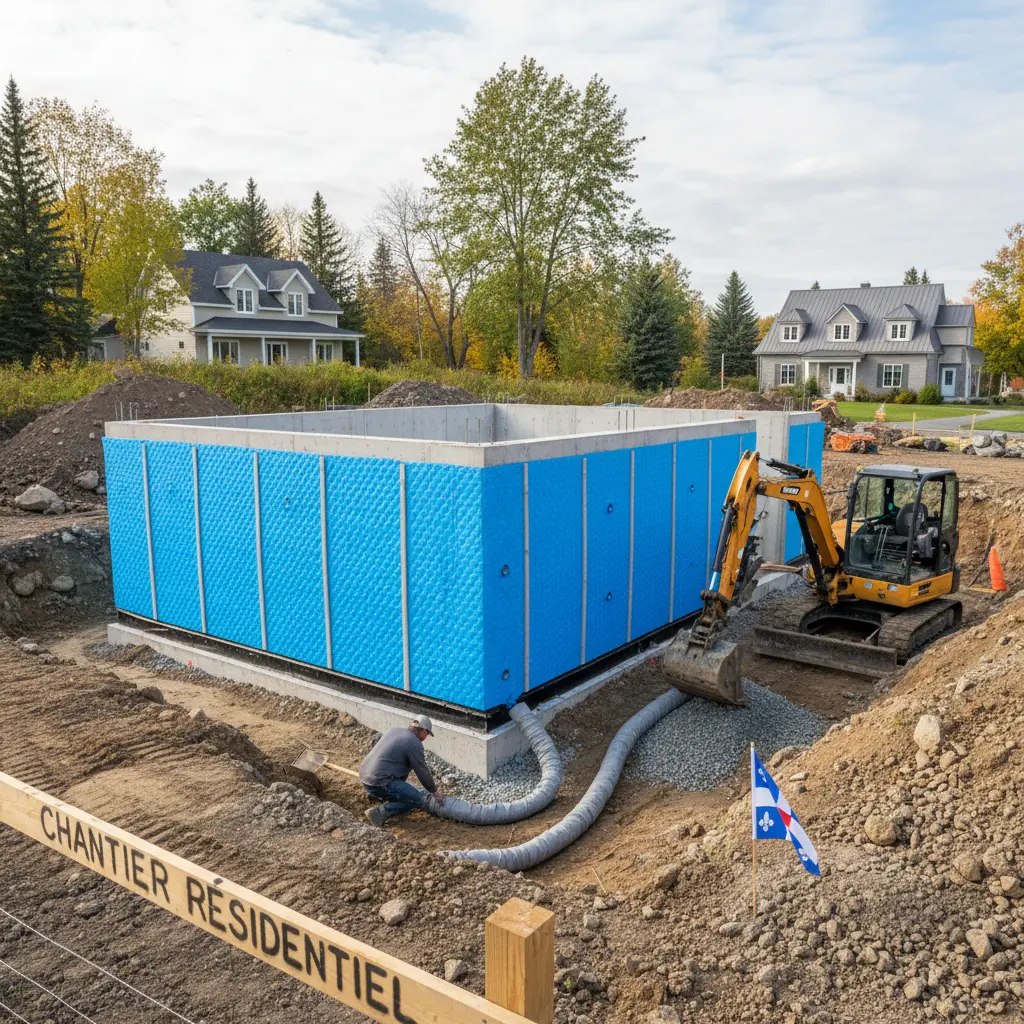
Drainage and Waterproofing: Protecting Your Quebec Home
In Quebec, extreme weather variations place constant stress on residential foundations. Between the spring thaw and heavy autumn rains, water is always looking for a way in.
Poor moisture management can lead to foundation cracks, mold, and a major loss in property value. Investing in an efficient drainage system is an absolute necessity.
Understanding the role of the French drain and waterproofing membranes helps prevent costly repairs and ensures the health of the occupants.
🚀 Compare 3 verified contractors now
Request a free quoteWhy is Waterproofing Crucial in Quebec?
Quebec soil, often composed of clay or rock, retains water unevenly. Without proper waterproofing, hydrostatic pressure pushes water through the porous concrete.
Excessive basement humidity isn't just an aesthetic issue. It compromises structural integrity and promotes the growth of mold spores that are harmful to your health.
Signs of a Drainage Problem
Several signs indicate that your drainage system is failing or non-existent:
- Presence of efflorescence (white powder) on the concrete.
- Persistent musty smell in the basement.
- Appearance of horizontal or vertical cracks.
- Water pooling near exterior walls.
How a French Drain Works
A French drain, or foundation drain, is a perforated pipe installed at the base of the footing. Its role is to collect groundwater and direct it away from the structure.
In 2025, RBQ standards require precise installation methods, including the use of crushed stone and geotextile membranes to prevent clogging from sand or silt.
[GOOD TO KNOW] A French drain has an average lifespan of 25 to 30 years. If your home dates back to the 90s, a camera inspection is highly recommended.
Types of Waterproofing Membranes
Draining water is only half the battle; you must also prevent the foundation wall from absorbing it. There are three main solutions on the Quebec market:
- Liquid Membrane (Tar or Elastomer): Applied by roller or spray, it seals the concrete pores.
- Dimpled Membrane (Delta-MS type): A rigid plastic sheet that creates an air gap between the soil and the wall.
- Self-Adhesive Membrane (Blueskin type): Offers superior protection against soil movement.
[ERROR TO AVOID] Never apply interior sealant to fix an external infiltration problem. This traps water inside the concrete and accelerates its degradation.
Project Costs in Quebec (2025-2026)
Prices vary based on foundation depth, accessibility, and obstacles like decks or heat pumps.
Here are the average rates for a standard home (30x40 feet):
| Type of Work | Min Price (linear ft) | Max Price (linear ft) |
|---|---|---|
| French Drain Installation | $150 | $350 |
| Waterproofing Membrane | $40 | $90 |
| Camera Inspection | $250 (flat fee) | $600 (flat fee) |
| Drain Cleaning (Pressure) | $500 | $1,200 |
| Complex Excavation | $200 | $450 |
🚀 Get real prices for your project
Compare quotesKey Installation Steps
A professional drainage project follows a rigorous protocol to ensure longevity:
- Excavation: Digging down to the foundation footing around the perimeter.
- Cleaning: High-pressure washing of the walls for maximum membrane adhesion.
- Crack Repair: Injection of polyurethane or epoxy if necessary.
- Membrane Application: Applying the chosen protection.
- Drain Placement: Installing the pipe with an adequate slope toward the outlet.
- Backfilling: Using 3/4 net stone to facilitate water flow.
Ensure the contractor installs clean-out chimneys (access ports) to allow for future maintenance without digging.
When to Hire a Specialized Contractor?
It is imperative to hire an expert as soon as you notice active infiltration or if you plan to finish your basement. Investing $15,000 in a basement without checking the drainage is a major financial risk.
An RBQ-certified contractor has the necessary insurance and guarantees that the work meets the Building Code.
How to Choose Your Contractor?
- Check the RBQ license (category 2.2 or 2.4).
- Ask for proof of liability insurance.
- Demand a written contract including backfilling details.
- Check recent customer reviews on PRONEK.
[TIP] Take advantage of the excavation to check your water inlet and sewer outlet. Replacing them at the same time reduces machinery costs.
FAQ - Drainage and Foundations
Q: Does my insurance cover French drain replacement?
No, drain replacement is considered normal maintenance. However, damage caused by a sudden leak may be covered depending on your policy riders.
Q: How long does the work take?
For an average single-family home, expect 3 to 5 business days, depending on site complexity.
Q: Is a French drain mandatory in Quebec?
Yes, for all new residential constructions since the 1970s, according to the National Building Code.
Conclusion
Drainage and waterproofing are the pillars of your home's longevity. In Quebec, neglecting these aspects inevitably leads to costly structural issues.
By choosing quality materials and a qualified contractor, you protect your investment and ensure a healthy environment for your family.
🚀 Ready to start? Receive 3 free quotes in 48h
Post my projectFrequently Asked Questions
How long does a French drain last?
On average, a French drain lasts between 25 and 30 years. Its lifespan depends on installation quality and soil composition.
Can a French drain be installed in winter?
It is possible but much more expensive due to frozen ground. It is best to perform this work between May and November.
How do I know if my drain is clogged?
High basement humidity, puddles near walls, or a professional camera test will confirm if there is a blockage.
Frequently Asked Questions
How long does a French drain last?
On average, a French drain lasts between 25 and 30 years. Its lifespan depends on installation quality and soil composition.
Can a French drain be installed in winter?
It is possible but much more expensive due to frozen ground. It is best to perform this work between May and November.
How do I know if my drain is clogged?
High basement humidity, puddles near walls, or a professional camera test will confirm if there is a blockage.